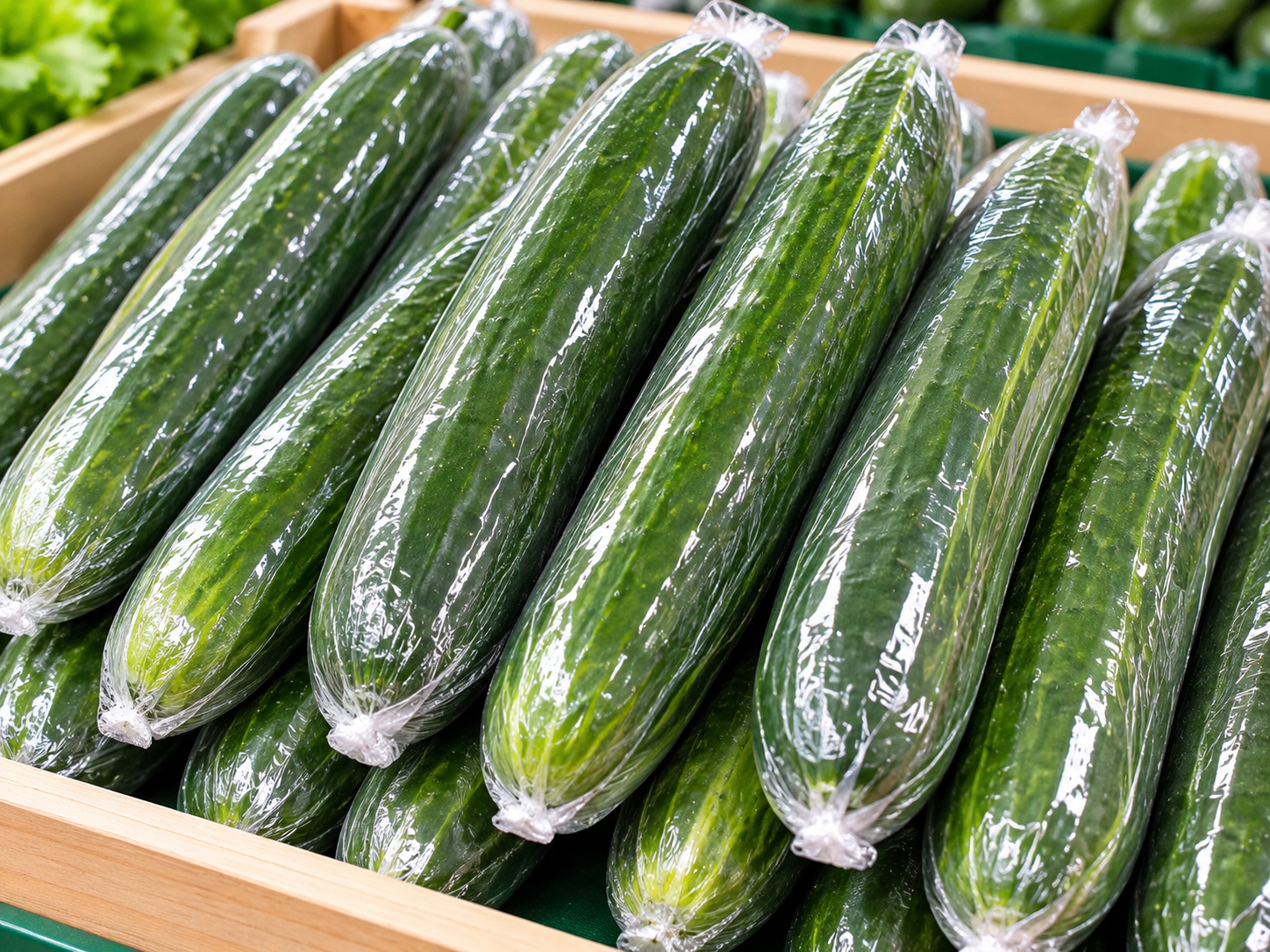
Learn how shrink PE can be used as primary food packaging, including its advantages, applications, technical considerations, logistics benefits, and sustainability potential.

Aluminum-Foil-Free Barriers in Flexible Packaging: SiOx, AlOx, Functional Coatings, and Advanced Metallization
In flexible packaging, removing aluminum does not mean sacrificing barrier performance. It means redesigning the structure to achieve the required OTR/WVTR targets, maintain good machinability, and remain compatible with recyclability strategies and packaging communication goals.
Today, the most widely used alternatives to aluminum foil structures fall into four main families: SiOx, AlOx, functional coatings, and advanced metallization (without foil but with an ultra-thin metallic layer).
This article explains what each technology delivers, where it typically fails, and how to specify it so that it performs reliably in both conversion and packaging operations.
1) First, technical clarity: “aluminum-free” ≠ “metal-free”
In practice, the most common goal is foil-free packaging, because aluminum foil provides excellent barrier properties but introduces challenges in:
- Recyclability (structure complexity and layer separation)
- Flexural performance (microcracks and “flex-crack” in certain constructions)
- Transparency and microwave compatibility (depending on application)
- Conversion complexity (adhesives, defect control, and lamination management)
Advanced metallization (METPET / METBOPP) still uses aluminum, but in an extremely thin vacuum-deposited layer. It is not foil; it behaves differently and enables alternative design approaches.
2) What do you actually need to protect? Oxygen, moisture, light, or aroma
Before selecting a technology, define your protection profile:
- Oxygen (OTR): critical for coffee, fatty snacks, nuts, nutritional products, powdered dairy, and OTC pharmaceuticals.
- Moisture (WVTR): critical for hygroscopic powders, cookies, cereals, dehydrated foods, and effervescent tablets.
- Light: relevant for oils, nutraceuticals, and light-sensitive ingredients.
- Aroma/volatiles: spices, coffee, cosmetics.
Barrier selection should not be made by material name alone, but by understanding the failure mechanisms: flexing, humidity exposure, temperature, abrasion, pinholes, and process variability.
3) SiOx and AlOx: transparent barrier (with handling sensitivity)
What they are
- SiOx (silicon oxide) and AlOx (aluminum oxide) are ultra-thin ceramic coatings, typically vacuum-deposited onto substrates such as PET or BOPP (and sometimes PA/nylon).
- Their key advantage is providing high barrier performance while maintaining transparency.
Typical advantages
- High oxygen barrier, especially when SiOx or AlOx layers are well executed
- Transparency, enabling true “window” packaging designs
- Better microwave compatibility compared with metallized films (depending on structure)
- Potentially better alignment with recyclability pathways than foil (depending on inks, adhesives, and overall structure)
Risks and failure modes
- Flex cracking / microfractures: bending can fracture the ceramic layer and reduce barrier performance.
- Pinholes: localized defects that compromise barrier integrity.
- Abrasion sensitivity: especially if the layer is exposed or poorly protected.
- Thermal sensitivity in severe thermal processes (e.g., some retort conditions depending on supplier formulation).
Engineering best practices
- Protect the barrier layer through lamination design and protective layers.
- Specify post-flex barrier testing, not only flat-film OTR/WVTR values.
- Define measurement conditions for OTR/WVTR (temperature and relative humidity) consistent with the real product environment.
4) Functional coatings: chemistry as barrier (and as risk)
When referring to coatings, we mean layers applied by coating processes that can provide:
- Oxygen barrier (e.g., PVOH-based, PVdC, or proprietary systems)
- Grease and aroma barriers
- Improvements in sealability or printability
Typical advantages
- Integrate well into coating lines and can be cost-competitive.
- Enable foil-free solutions, and in some cases improved recyclability compatibility depending on formulation.
Common risks
- Humidity sensitivity: some coatings lose barrier performance at high relative humidity.
- Migration or odor issues: dependent on chemistry, curing, and interaction with inks and adhesives.
- Performance variability: strongly influenced by coat weight control, uniformity, and curing conditions.
What to request in specifications
- Oxygen barrier measurements at realistic RH conditions, not only at 0% RH if the supply chain operates at 50–80% RH.
- Adhesion validation (peel testing) after curing and after aging.
- Regulatory compliance if indirect food contact is involved (according to the relevant market).
5) Advanced metallization (METPET / METBOPP): robust barrier without foil—but not transparent
What it delivers
- Very good light barrier and strong moisture barrier; oxygen barrier performance depends on metallization level and protection.
- Excellent performance in high-volume snack and dry product packaging.
- Generally more tolerant to handling than SiOx/AlOx, although poor design can still lead to flex degradation.
Typical risks
- Not transparent (although semi-transparent effects can be designed, they are not true windows).
- Microwave compatibility may require special design due to metal presence.
- Recyclability depends on the overall structure (mono-PP / mono-PE vs multi-material).
Best practices
- Protect metallization using lacquer or protective coatings where needed.
- Specify COF targets and sealing performance, since metallized surfaces behave differently in packaging machines.
- Validate folding and transport behavior through flex and barrier testing.
6) Quick comparison: when to choose each technology
If you need transparency plus high barrier:
→ SiOx / AlOx, with emphasis on flex testing and layer protection.
If your priority is light and moisture protection with robust snack performance:
→ METBOPP / METPET (advanced metallization).
If the structure requires fine tuning of cost/performance and controlled conversion:
→ Functional coatings, with special attention to humidity conditions and coating consistency.
If the product undergoes severe thermal processing (retort or aggressive hot-fill):
→ Evaluate case by case. Often the answer is a specific engineered structure, and not all SiOx/AlOx/coating solutions are suitable. In retort applications, adhesive systems and thermal layers become critical.
7) How to specify it like a professional (and avoid surprises)
When qualifying a foil-free barrier solution, do not rely solely on OTR/WVTR values on a datasheet. Include:
- OTR and WVTR with defined test conditions (temperature and RH)
- Post-flex barrier testing and aging evaluation
- Adhesion (peel strength) after full curing and thermal stress
- COF values (internal/external) and stability over time
- Sealing performance: seal initiation temperature, sealing window, hot tack, and contamination resistance
- Optical properties such as haze and gloss when relevant (especially for SiOx/AlOx)
- Distribution simulation tests: drop, compression, and vibration
Conclusion: foil-free barrier is achieved through design, not through a single material
SiOx, AlOx, functional coatings, and advanced metallization are powerful tools, but their real-world performance depends on how they are integrated into the packaging structure: substrate, printing system, adhesives, sealant layers, and operating conditions.
The correct approach is to define the packaging objective—shelf life, distribution conditions, and packaging line requirements—and design the structure so the barrier survives flexing, humidity exposure, temperature variation, and real operational stresses.
If you share:
- the product (and sensitivity to oxygen, moisture, or light),
- the format (flowpack, pouch, sachet),
- the process (HFFS, VFFS, premade pouch, hot-fill, retort),
we can propose two or three typical foil-free structures and outline the validation tests required for plant qualification.
Entradas Relacionadas