'/%3E%3Cpath%20fill='%2330c2dc'%20d='M493%20379c-14-6%2010-16%2014-16-8-1-21%203-27%203l-57-3c-7-1-12-10-10-10-3%203-37-9-27%200l9%2014c15-3%2030%208%2013%2014%203%200%2057-4%2085-2'/%3E%3Cpath%20fill='%23f9aa51'%20d='M475%20366v13q-1%207-7%207h-35q-6-1-7-7v-13q0-6%207-7h35q7%201%207%207'/%3E%3Cpath%20fill='%230c8489'%20d='M388%20335c-11%205-28-12-25-24%203-13%2028-2%2029%2014%207-2%2020%202%2025%207%209-11%2038-3%2041%2010%2011-13%2028-9%2034-3%2013-10%2033-4%2030%207-3%2012-29%2015-37%206-1%201-20%200-22%2016h-11c-3-4-2-14-1-15-11%204-29-3-34-10-7%204-25-1-29-8'/%3E%3Cpath%20fill='%23fcca3d'%20d='m419%20304-3%203c-7-4-11%208-19-2-2-3-3-10%205-16%205-3%2018-5%2019%200%203%206%207%206%204%209l4%203v9zm56%2031c-15%204-16%209-15%2012q-7-6-1-10c-9-8-10%206-8-6%201-8%2024%205%2018-15h9q-1%2015%2017%2019c0%2024%202-3-6%205-2%200-5-6-14-5'/%3E%3Cpath%20fill='%238f4620'%20d='M418%20268c-4-24%2020-46%202-44-16%201-18-2-18-2-6-7%2010-11%209-20q2%2011%205-4c2%206%204%208%205-3%205%207%2017%205%2025%2010q-3-6-10-11c-12-11%2012-9%2012-9%2033-11%2044%2012%2061%2012-17%203%2013-2%2038%2058-18-11%2012-1-7%2067%200%200-45-57-36-39-10-5-20-18-20-18-11%203-2%204-1%2020%200%200%2043%2030%2045%2036%201%206-10%204-25%207-16%202-23-20-22-10s-16%205-16%205-19-29-19-9c-39-3-20-15-20-15s10%202%208-2c-2-3-12-4-16-29m-7-66'/%3E%3Cpath%20fill='%23f9c83a'%20d='M407%20220c10%203%2015-3%2016%204%204%204-22%209-19%2014-7%203-18-10-5-16%201-5%206-3%206-3l6-8q3%207-4%209'/%3E%3Cpath%20fill='%23a8ac71'%20d='M403%20309c-15%201-19%205-23-16-18-16-8-25-7-28%201-8-12-11-15-10-1-8%2022-1%2021%209-1%209-7%2011%206%2024%205%204%203%2014%2011%2011-1%204%203%2010%207%2010m6-18c10-8-24%202-26-24-1-15%2027-22%2023-34l-5-3q1-4%207-3c19%2015-11%2027-14%2038-4%2024%2031-5%2025%2029l-3%205q-7-4-7-8m-11-54c-25%206-23-35-7-35%201%2020-15%2015%205%2015-8%200-13%2011-3%2012q1%206%205%208'/%3E%3C/svg%3E)


Learn how shrink PE can be used as primary food packaging, including its advantages, applications, technical considerations, logistics benefits, and sustainability potential.
How to Choose the Right Flexible Packaging Structure for Each Product.
The structure of a flexible package is the combination of films, materials, and layers that determines how a product will be protected, preserved, transported, and presented. In other words, it is not only about manufacturing a bag, but about designing a solution that responds to the real conditions of the product, the filling process, distribution, and the point of sale.
Choosing the right structure can help improve shelf life, reduce the risk of leaks or breakage, protect against moisture or oxygen, optimize sealing performance, and, increasingly, move toward solutions with a better sustainability profile.
The Product Defines the Structure
The first step in designing a flexible package is understanding the product that will be packed.
A dry food product does not have the same needs as a frozen product. A mineral powder does not behave the same way as a sauce. A pharmaceutical product requires a different level of control than a household product. That is why the structure must be defined according to the behavior of the content.
Some products mainly require moisture barrier, such as powders, granules, snacks, dehydrated foods, or cement-based products. Others require oxygen barrier, such as fatty foods, coffee, oxidation-sensitive products, or packages designed to extend shelf life. There are also products that require puncture resistance, flexibility under freezing conditions, vacuum compatibility, high stiffness for display, or strong performance on automatic filling lines.
The right structure is the one that balances all these factors without overengineering the package or compromising its performance.
Materials and Their Functions Within a Structure
Each material used in flexible packaging performs a specific function.
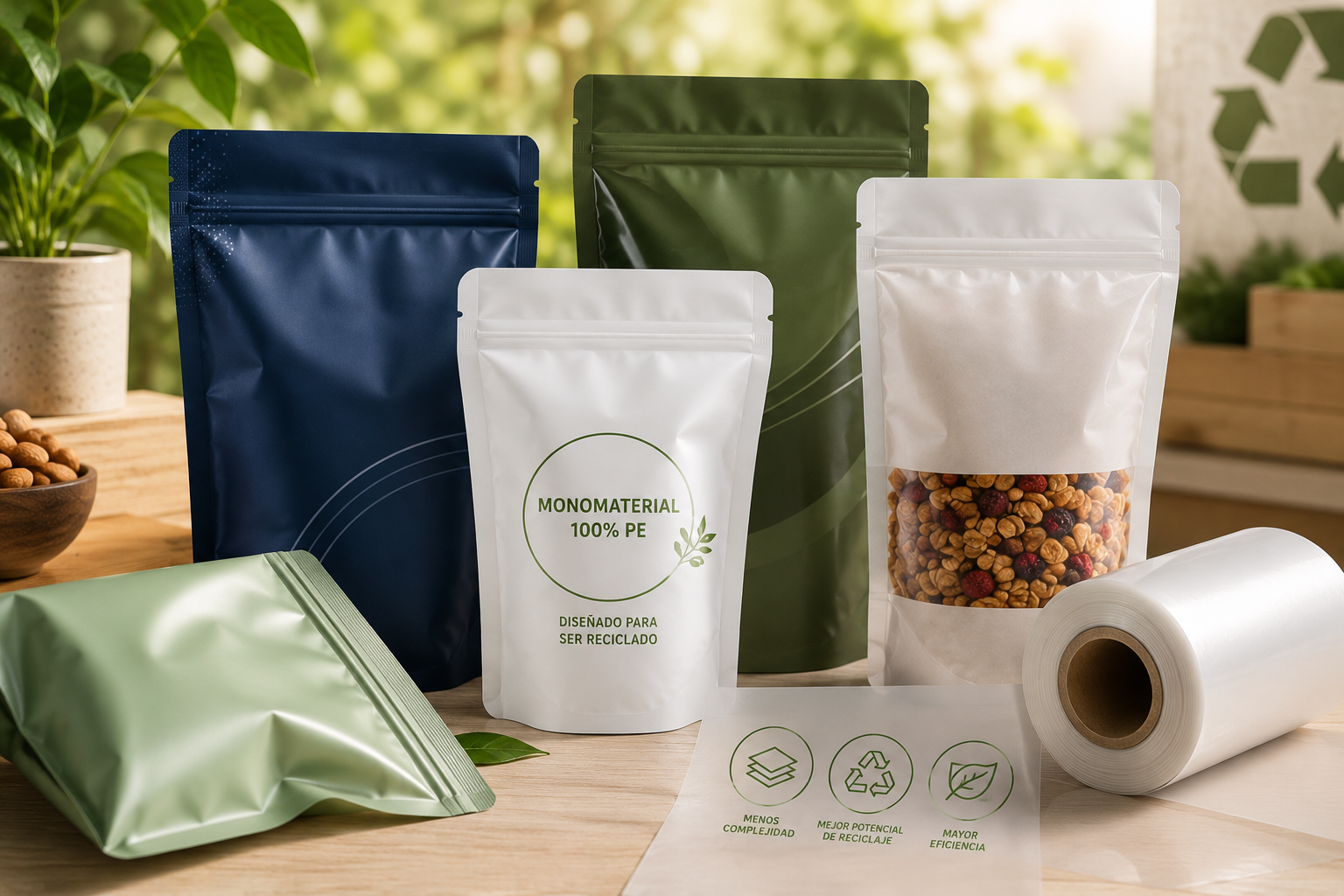
PE, or polyethylene, is widely used as a sealant layer. It provides flexibility, strong sealing performance, and moisture protection. It is also an important base material for developing recyclable or monomaterial structures.
PET is often used as an outer layer due to its stiffness, dimensional stability, thermal resistance, and excellent printability. It is common in structures where appearance, resistance, and machine performance are important.
PA, or polyamide, also known as nylon, is used when the package requires greater mechanical strength, puncture resistance, flexibility, or vacuum performance. It is common in packaging for refrigerated products, frozen products, vacuum-packed foods, or products with irregular edges.
EVOH is incorporated when high oxygen barrier is required. It can be critical for products sensitive to oxidation, aromas, fats, or freshness loss, always considering that it must be properly protected within the structure.
MDO PE is polyethylene that has been mechanically oriented to improve stiffness, stability, and appearance. Its main value is that it can help replace materials such as PET in certain applications, enabling the development of structures with greater compatibility for recycling.
Barrier, Resistance, and Sealing
A good structure must answer three main questions:
What does the product need protection from?
This may include moisture, oxygen, light, grease, aroma loss, external contamination, or texture degradation.
What physical stress will the package need to withstand?
Product weight, stacking, transportation, drops, abrasion, freezing, vacuum, puncture, or in-store handling.
How will the product be filled and sealed?
Machine performance is just as important as barrier performance. A structure may be technically robust, but if it does not seal properly, deforms, wrinkles, or runs poorly on the line, the package will not be efficient.
For this reason, the development of a structure must consider both product protection and the full industrial process: forming, filling, sealing, transportation, storage, and display.
Sustainability: Designing Without Sacrificing Performance
Sustainability is now a central variable in flexible packaging design. However, a sustainable solution should not be evaluated only by the material used, but by its overall performance.
In many cases, it is possible to move from traditional multimaterial structures toward alternatives that are more compatible with recycling, such as:
MDO PE / PE
MDO PE / PE EVOH PE
Monomaterial PE
Monomaterial PP
These structures can reduce packaging complexity and improve its environmental profile, as long as they meet the required barrier, resistance, sealing, and shelf-life performance.
The challenge is finding the right balance. For some products, a monomaterial structure may be enough. For others, incorporating a barrier layer or a technical material may be justified to ensure product preservation and prevent waste. From a sustainability perspective, properly protecting the product is also part of the equation.
Examples by Product Type
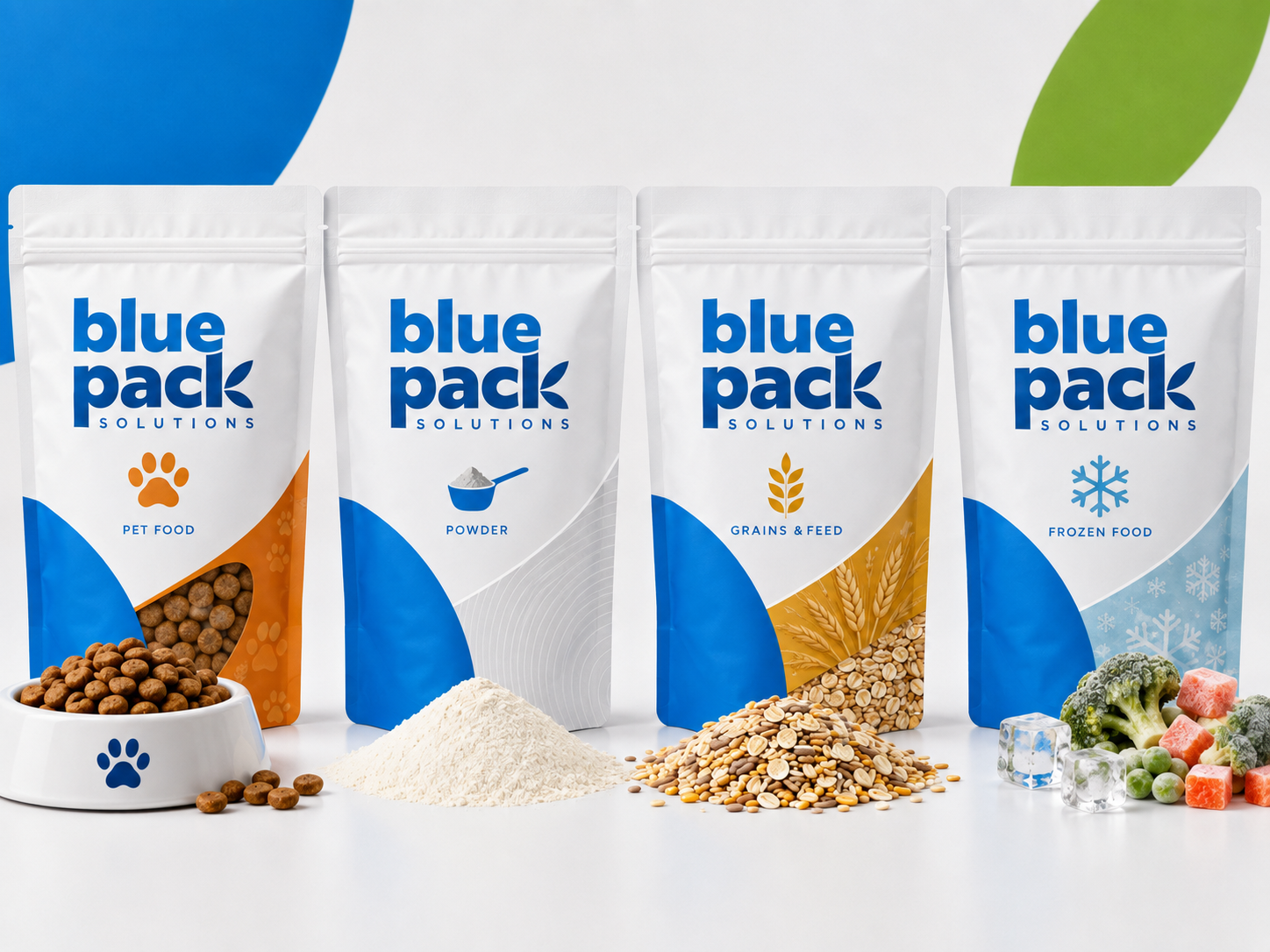
For pet food, structures often require good resistance, grease and aroma barrier, strong sealing performance, and attractive shelf presence. Depending on the product, recyclable, monomaterial, or high-barrier structures may be evaluated.
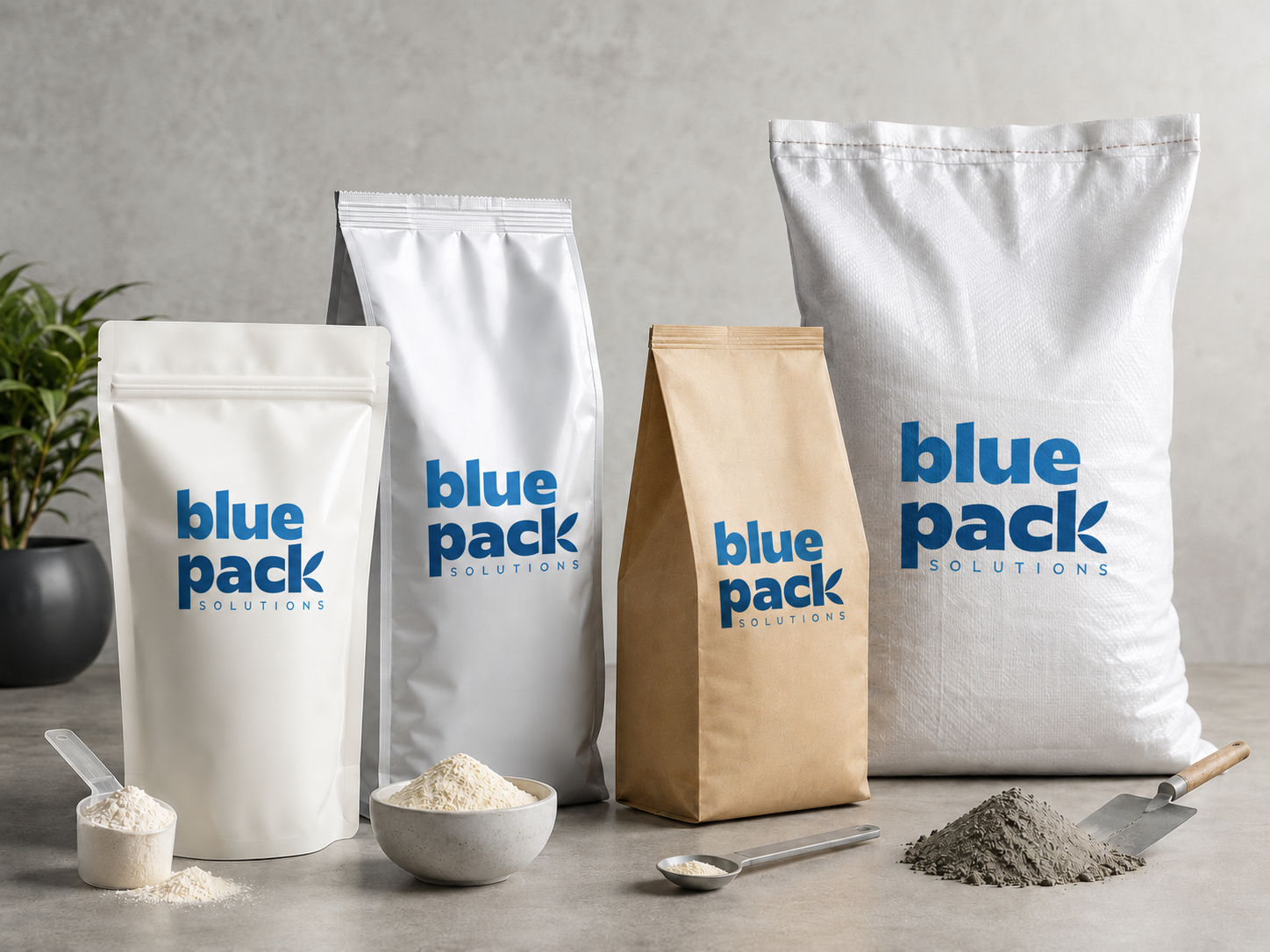
For powder products, such as food mixes, supplements, ingredients, mineral powders, or construction products, moisture protection and mechanical resistance are critical factors.
For frozen foods, the structure must maintain flexibility at low temperatures, prevent cracking, protect against dehydration, and preserve seal integrity.
For personal care and beauty products, packaging must combine premium appearance, chemical resistance, product compatibility, and strong sealing performance.
For pharmaceutical products, the priority may be protection, safety, traceability, stability, and compliance with regulatory requirements.
Each industry has different challenges, and that is why each structure must be designed specifically.
A Well-Designed Package Starts Before Production
The development of a structure should not begin with the question, “What bag do I need?” It should start with a more complete technical evaluation:
What product will be packed?
What shelf life is expected?
Is the product sensitive to moisture, oxygen, grease, aroma, or light?
What is the weight of the presentation?
How will it be filled and sealed?
Where will it be stored?
How will it be transported?
How will it be displayed?
Is there a goal for recyclability or material reduction?
Answering these questions makes it possible to better select the right materials, gauges, barriers, and formats.
At Blue Pack Solutions, we develop flexible packaging structures based on the real needs of each product and industry. Our approach combines technical performance, commercial efficiency, and sustainable alternatives to create solutions that protect better, perform better, and respond to today’s market demands.
Because good packaging does not start with a bag.
It starts with a well-designed structure.
Blue Pack Solutions
Smarter Packaging, Sustainable Solutions.
Entradas Relacionadas